
Water Damage Restoration in Lakewood: Beat the Mold Clock
Water damage restoration in Lakewood only works if it happens fast. That's because mold spores can colonize damp materials in as little as 24 to 48 hours. Once October's steady rains soak your foundation, the clock starts ticking whether you notice the puddle or not. Homeowners across our community often underestimate how quickly a minor seepage problem becomes a structural and health hazard.
Why October Rain Hits Lakewood Basements Hard
Northeast Ohio sees roughly 39 inches of rain a year, and much of it arrives in unpredictable bursts during fall. Lakewood's clay-heavy soil doesn't drain well, so water pools around foundations instead of soaking away. Add in older municipal sewer lines and hardworking sump pumps, and basement flooding becomes almost routine for many century homes.
October brings its own pressure test. Falling leaves clog gutters and downspouts, sending rainwater straight toward the foundation instead of away from it. A sump pump that struggles during a heavy autumn storm can leave standing water sitting in a basement corner for days before anyone notices.
The 48-Hour Countdown Nobody Talks About
Here's the part most homeowners miss: drying the surface isn't the same as solving the problem. Carpet padding, drywall, and wood framing can look dry on top while staying saturated underneath. That hidden moisture is exactly what mold needs to establish a colony within two days.
Ongoing housing surveys suggest that roughly 47% of U.S. homes deal with active mold or dampness issues at some point. Many of those cases trace back to a flood or leak that wasn't dried thoroughly enough, fast enough. If materials stay wet past that 48-hour window, they typically need to be professionally removed rather than salvaged.
Common DIY Mistakes That Backfire
A shop-vac and a box fan feel like a reasonable response to a flooded basement. Unfortunately, that approach rarely reaches the moisture trapped inside walls, subfloors, or insulation.
Here are the most common missteps we see in Lakewood homes after a flood:
- Running fans without industrial dehumidifiers, which just circulates damp air instead of pulling moisture out
- Leaving wet carpet padding in place because the carpet itself feels dry
- Painting over water stains instead of addressing the moisture source behind them
- Skipping moisture readings, so hidden damp pockets get missed entirely
- Waiting too long to call for help while assuming the problem will dry itself out
Each of these mistakes buys time for mold to spread somewhere you can't see it. By the time a musty smell shows up, the colony is usually already established.
What Professional Water Damage Restoration Actually Involves
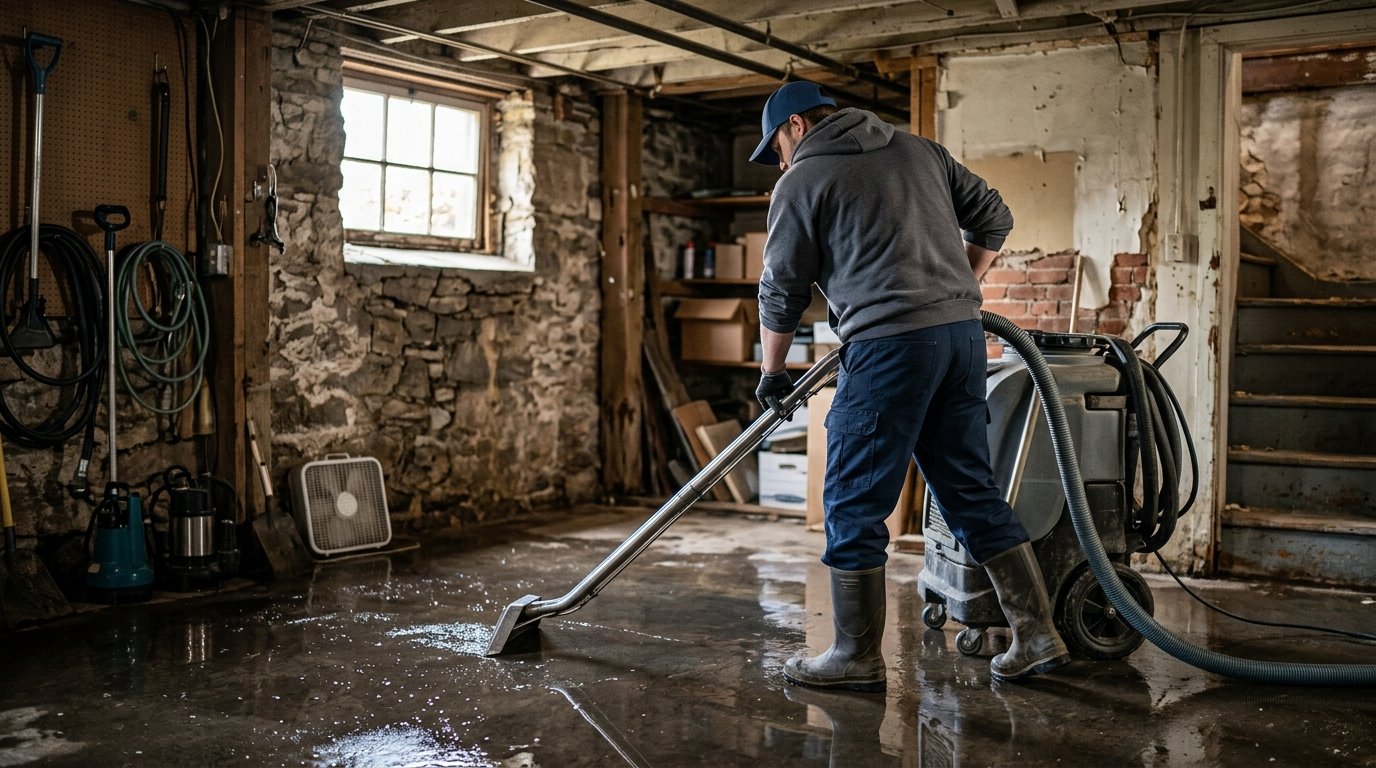
Real restoration goes well beyond mopping up standing water. Technicians use industrial-grade extraction equipment to pull water out of carpets, subfloors, and wall cavities. Structural dehumidifiers then drop the ambient moisture level throughout the space, drying materials from the inside out before mold has a chance to take hold.
Moisture meters help crews confirm that wood framing and drywall have actually returned to safe levels, not just that they feel dry to the touch. When water has been sitting for too long, damaged materials are removed and replaced rather than treated as salvageable. This is also the point for a follow-up mold inspection. It makes sense, especially if moisture reached areas that were closed up for more than two days.
Customers consistently mention how quickly our team responds when they call about a leak or flood. That speed matters most during a water event. Speed genuinely determines whether a basement flood stays a simple cleanup or turns into a much bigger, moldier project.
Signs Your Basement Needs Professional Attention
Not every water event is obvious.
Watch for these warning signs after any heavy October rain:
- A musty odor that lingers even after the visible water is gone
- Discoloration or warping on baseboards, drywall, or wood trim
- A sump pump that runs constantly or seems to struggle keeping up
- Efflorescence, a white chalky residue, forming on basement walls
- Any flooring that feels soft, spongy, or cooler than the surrounding area
If you notice even one of these signs, it's worth having the area assessed before the next storm arrives. Hathaway Environmental LLC has spent years helping Lakewood homeowners catch these issues early.
Frequently Asked Questions
How fast does water damage restoration need to start after a flood?
Ideally within hours, and certainly before the 48-hour mark when mold growth typically begins on damp materials.
Can I just dry out my basement myself with fans?
Standard fans move air around but rarely pull enough moisture from inside walls, subfloors, or padding, which is why professional dehumidification equipment matters.
What happens if drywall or carpet stays wet too long?
Once materials pass the 48-hour window without being fully dried, they generally need to be professionally removed rather than dried in place.
Does water damage always lead to mold?
Not if it's addressed quickly and thoroughly, but delayed or incomplete drying makes hidden mold growth far more likely.
Should I get a mold inspection after a flood, even if I don't see mold?
Yes, since mold can grow inside walls or under flooring where it isn't visible, and testing gives you confidence the space is genuinely safe.
If a recent storm left your basement damp or you're seeing warning signs of hidden moisture, don't wait out the clock. Reach out for a fast, professional water damage restoration assessment before mold gets the upper hand.